

Academic Rigor
Transformative Mission
Ethics at the Core
At the Oxford Centre for Artificial Intelligence, our engineers, data scientists, and social scientists blend academic insight with practical experience. Ethics and societal impact are built into every project, ensuring solutions that are both technically sound and socially responsible.
Our mission is to help individuals and organisations harness the transformative power of AI, driving innovation while ensuring its use is responsible and delivers meaningful impact across industries.
Meet our team

Professor Nigel Mehdi
Professor Nigel Mehdi
Nigel is dedicated to equipping leaders with the knowledge to navigate the intersection of sustainable urban development, economics, and emerging technologies. His work explores how economic frameworks and artificial intelligence can be harnessed to create more resilient cities, enhance decision-making, and drive innovation across sectors. Through his teaching and leadership, he prepares the next generation of professionals to tackle complex urban, economic, and technological challenges responsibly and effectively.
Nigel is Professor of Computer Science at the University of Birmingham and teaches on Oxford’s Software Engineering Programme. He also lectures in real estate economics and property technology at Oxford Brookes University. He is the former Director of the DPhil in Sustainable Urban Development at the University of Oxford and directed the Master’s programme from 2017 to 2022, during which he received the OUSU Outstanding Tutor Award in 2017. Since 2018, he has served as Course Director for both the UAE Artificial Intelligence Programme and the Foundations for Chief AI Officers initiative for the UAE federal government.
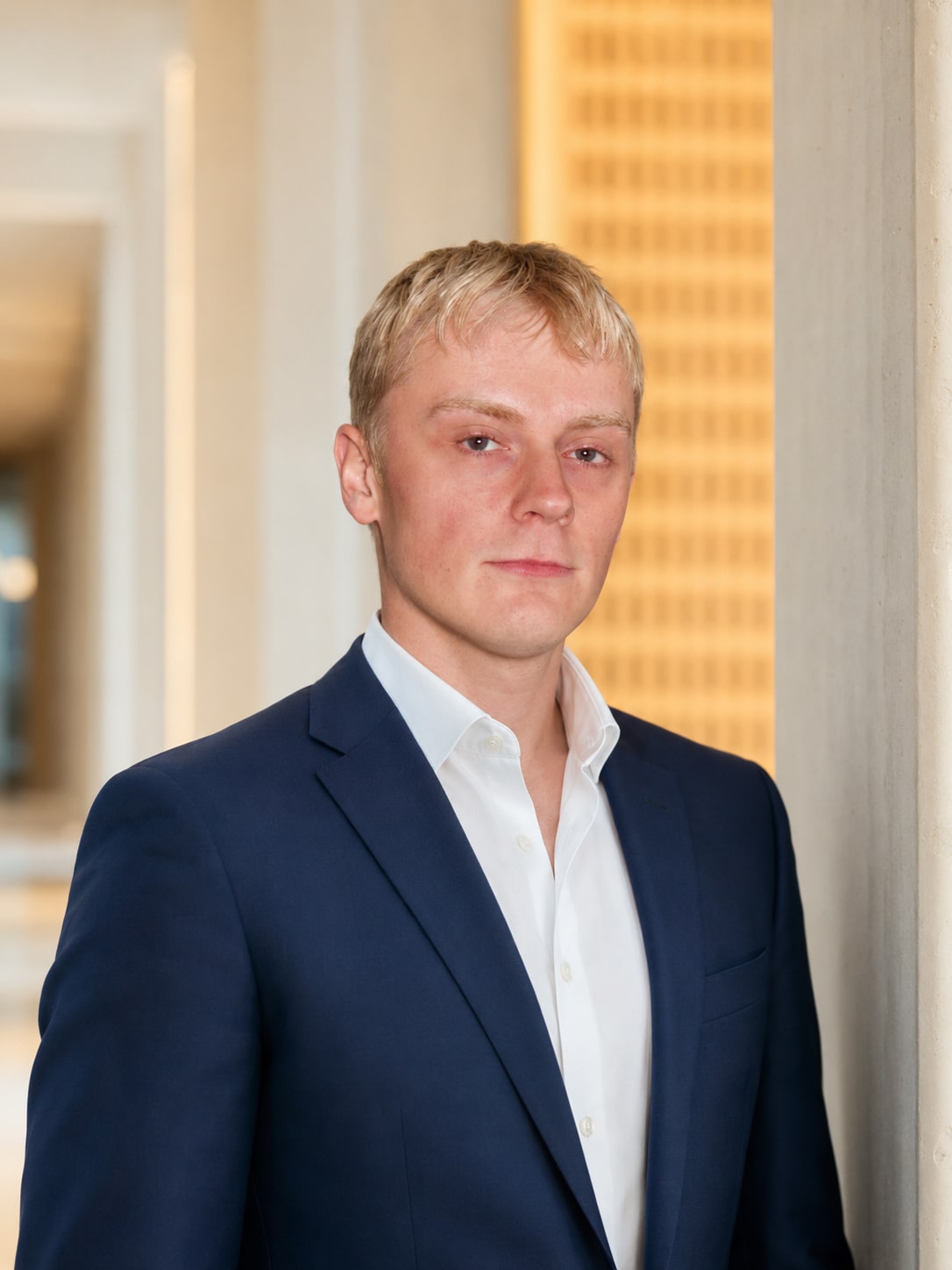
Rory Young
Rory Young
Rory advocates for the responsible integration of Large Language Models (LLMs) that enable businesses to thrive within their communities, contributing positively to both economic innovation and societal well-being. His insights into organisational behaviour highlight the importance of aligning business goals with ethical AI deployment, ensuring that companies not only succeed financially but also harness LLMs to make a meaningful impact on local communities, society, and the planet.
Building on a background in economics, Rory earned an MSc in Sustainable Urban Development from the University of Oxford. He also holds a Bachelor’s degree in Economics, Finance, and International Business, giving him a strong foundation in the relationship between economic growth and sustainable development.

Dr David Johnson
Dr David Johnson
David is an award-winning educator and advocate for the thoughtful integration of data science and computational methods into education, governance, and society. His work emphasises the responsible use of technology to enhance learning, improve decision-making, and contribute positively to community development. As a consultant for the United Nations, he has advised on big data strategies that align technological innovation with societal needs, ensuring that advancements in AI and data science deliver meaningful global impact.
He is a Visiting Fellow at the University of Oxford’s Kellogg College, having previously held a Junior Research Fellowship there from 2015–2018. David is also a Senior Associate Tutor (Honorary) at Oxford’s Department for Continuing Education. He has served as a Senior Researcher in Oxford’s Department of Engineering Science and held research positions at the Data Science Institute at Imperial College London and Oxford’s Department of Computer Science. He currently directs the Master’s Programme in Information Systems at Uppsala University, where he also leads the Information Systems section and contributes to the Uppsala University Computational Social Science Lab. David holds a PhD in Computer Science from the University of Reading and a Postgraduate Certificate in Teaching and Learning in Higher Education from the University of Oxford.

Dr Farah Shamout
Dr Farah Shamout
Farah is committed to advancing clinical decision-making through responsible, high-performance artificial intelligence. As the leader of the Clinical AI Lab at NYU Abu Dhabi, she focuses on developing machine learning methods that harness real-world data to drive innovations in computational precision health. Her work spans electronic health records, medical imaging, multi-modal fusion, and human-AI collaboration, all aimed at augmenting diagnostics, prognostics, and ultimately improving patient outcomes in clinical practice.
Farah is an Assistant Professor of Computer Engineering at NYU Abu Dhabi, Associated Faculty at NYU Tandon School of Engineering (Computer Science & Engineering and Biomedical Engineering Departments), and Affiliated Faculty at NYU Langone Health (Radiology). She previously served as an Assistant Professor Emerging Scholar at NYU, where she received the Campus Life Faculty Leadership Award in 2021. Farah completed her DPhil (PhD) in Engineering Science at the University of Oxford as a Rhodes Scholar, with research focusing on early warning models for clinical deterioration. She holds a BSc in Computer Engineering (cum laude) from NYU Abu Dhabi.

Dr Rasheed El-bouri
Dr Rasheed El-bouri
Rasheed is passionate about advancing machine learning techniques that enhance real-world decision-making, particularly in healthcare. His research focuses on developing robust meta-learning and reinforcement learning methods that can adapt to noisy, complex datasets such as time-series data and medical imaging, improving the efficiency and effectiveness of clinical care. He is especially interested in how machine learning can be used for planning, control, and real-time decision support in high-stakes environments.
Rasheed has spent the past five years working with the Oxford Centre for Artificial Intelligence. During his PhD, his research concentrated on creating machine learning models to optimise healthcare delivery, with a focus on improving outcomes while navigating the challenges of imperfect real-world data.

Jan-Hendrik Hoehnk
Jan-Hendrik Hoehnk
At the Oxford Centre for Artificial Intelligence, Jan brings a critical lens to how AI can be practically applied to sustainability challenges – from decarbonising property portfolios to enabling more transparent ESG reporting. With extensive experience in real estate and corporate sustainability strategy, he helps bridge the gap between technological promise and practical delivery, ensuring our programmes drive measurable impact and support the transition to a net-zero, circular economy.
Jan holds a Master of Architecture and a Master of Science in Sustainable Urban Development from the University of Oxford. He has broad experience in built-environment sustainability, with a focus on applying data-driven decarbonisation strategies.

Firas Darwish
Firas Darwish
Firas Darwish is dedicated to advancing responsible and interpretable artificial intelligence, with a particular focus on perception, interpretability, and uncertainty in machine learning systems. He joins the Oxford Centre for Artificial Intelligence Programme as a tutor, bringing experience in both technical research and AI governance.
His work spans clinical AI, where he has developed diagnostic and prognostic models at the Center for Artificial Intelligence and Robotics, as well as enterprise AI oversight, having contributed to monitoring frameworks and ethical evaluation methods at e&’s AI and Data division. Firas has also served on NYU Abu Dhabi’s AI Advisory Committee, helping shape strategic approaches to emerging technologies in education and research.
Firas earned his BSc in Computer Engineering from NYU Abu Dhabi and is set to begin his PhD studies in Statistics and Machine Learning at the University of Oxford as a UAE Rhodes Scholar.

Dhiyaa Al Jorf
Dhiyaa Al Jorf
Dhiyaa Al Jorf is passionate about building intelligent systems that bridge the gap between machine learning research and real-world impact. He joins the Oxford Centre for Artificial Intelligence Programme as a tutor, with a background in clinical AI, human-robot interaction, and embodied intelligence. At NYU Abu Dhabi, Dhiyaa led interdisciplinary projects ranging from intuitive prosthetic design and robotic systems to AI tools for medical diagnostics. His recent research focuses on uncertainty quantification in clinical decision support and muscle synergy-based gesture recognition, advancing the reliability and interpretability of human-centred AI.
Dhiyaa holds a BSc in Computer Engineering from NYU Abu Dhabi and begins his MSc in Computer Science at ETH Zurich, specialising in Machine Intelligence.

Partner with AI Experts Who Think Beyond the Code
At the Oxford Centre for Artificial Intelligence, we focus on helping organisations apply AI effectively and responsibly. Our team combines technical, ethical, and strategic expertise to deliver solutions for You.
Perspectives
We don’t just develop AI – we apply it where it counts. Our perspectives show how we have helped businesses boost efficiency, improve decision-making, and drive real impact.