

The 95%
Across industries, artificial intelligence has shifted from curiosity to capability. Businesses have moved beyond demos and prototypes into genuine attempts to weave AI into their operations. Yet despite the excitement, an MIT study suggest that up to 95% of pilot AI projects fail to reach production.
It is worth noting that the quoted statistic that 95% of AI pilots fail originates from an MIT-affiliated report on generative AI adoption rather than AI as a whole. The study focused on a narrow set of enterprise use cases and defined “failure” primarily as the absence of measurable financial return or large-scale deployment, rather than total project collapse. Several analysts have since argued that the figure has been overstated or misinterpreted, since many pilots deliver learning value, infrastructure upgrades, or incremental efficiencies not captured in profit metrics. In other words, the headline number may dramatise the scale of the problem – but the underlying message remains valid: most organisations struggle to move from experimentation to sustainable, integrated AI operations.
The reasons are complex – cultural, technical, and strategic – but they all converge on one point: organisations are treating AI pilots as isolated experiments rather than the first step in a broader transformation.
The Pilot Paradox
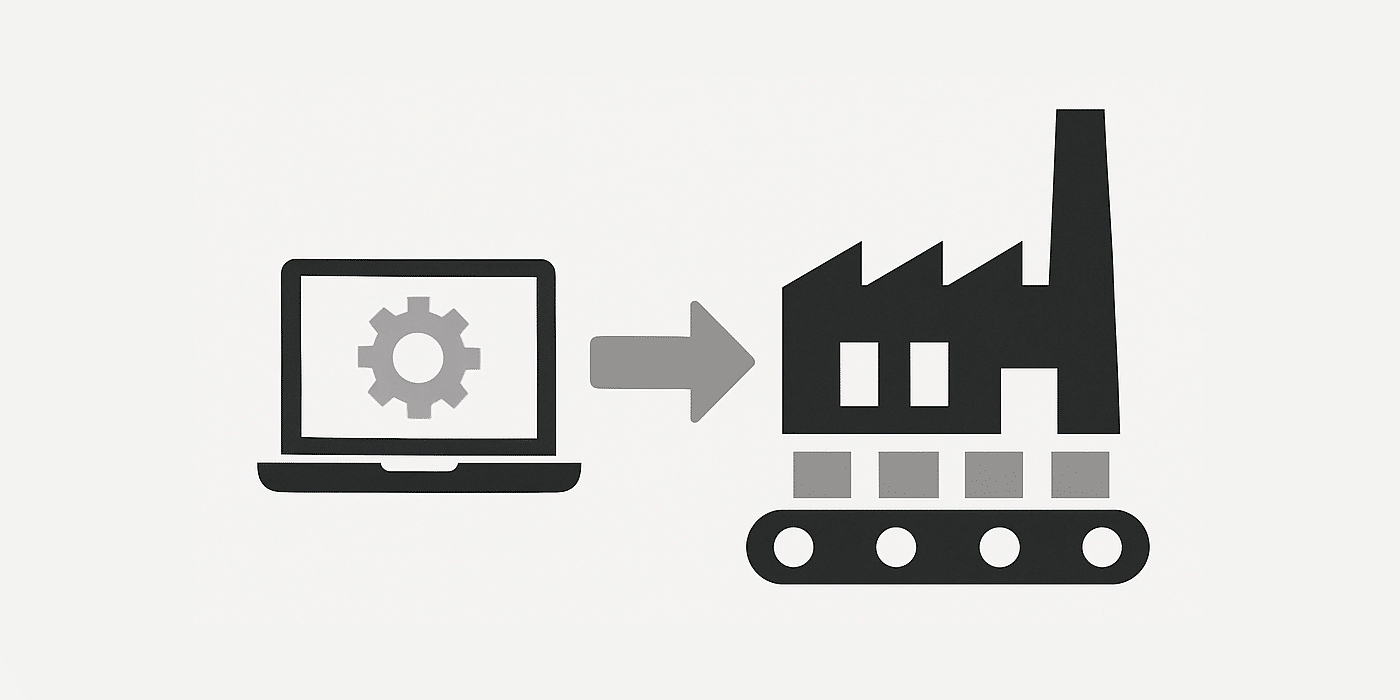
Pilots are meant to test feasibility but in practice, many become dead ends. We’ve found a typical scenario looks like this:
- A team identifies a promising use case.
- They assemble a small data set, get a model running, and produce some impressive charts.
- The pilot is declared a success.
- …And then nothing happens.
The project sits on a server or in a slide deck, disconnected from real workflows, unmaintained, and unsupported. The pilot was never designed to scale, integrate, or deliver measurable ROI.
This is what Deloitte recently called “the AI maturity gap”: the chasm between technical proof and organisational adoption.
Why Pilots Fail
Several recurring themes explain why so many initiatives stall before they ever create value:
- No Ownership Beyond the Pilot
Often, AI pilots are led by innovation teams rather than operational ones. Once the demo ends, no department claims it as part of their business process. Without an internal “owner,” the model simply has nowhere to live.
- Data Infrastructure Isn’t Ready
A pilot can run on a clean, curated dataset; production AI needs pipelines that continuously feed, validate, and govern data. Without this infrastructure, scaling becomes prohibitively expensive and technically fragile.
- Lack of Alignment with Business Goals
Many pilots focus on what’s technically interesting rather than what’s strategically important. The result: even a technically sound model fails to move the needle on revenue, cost, or risk.
- Change Resistance
AI challenges traditional roles and processes. Staff can see it as a threat rather than a tool, especially if the benefits aren’t clearly communicated. Without cultural adoption, technological adoption rarely follows.
- The Skills Mismatch
Organisations often underestimate the mix of skills required post-pilot: data engineering, model maintenance, Machine Learning Ops, cybersecurity, and ethical oversight. Without this multidisciplinary approach, promising pilots remain one-off experiments.
From Pilot to Production: The Next Step
So how can organisations avoid the 95% trap?
Here’s a practical roadmap we use when advising clients:
- Start with a “Why,” not a “What.”
Before launching another pilot, define the strategic purpose.
Is it to cut energy costs by 10%? Improve hiring processes? Overhaul staff efficiency? AI is a tool, not a goal in itself.
- Build a Scalable Data Foundation.
Treat every pilot as the seed of a long-term system. That means designing it with APIs, data governance, and integration in mind from day one. Data engineering is the quiet backbone of every successful AI product.
- Assign Clear Ownership.
Every production AI system needs a “home”. A business unit that benefits directly from it and is accountable for maintaining it. Without ownership, enthusiasm fades as soon as the project team moves on.
- Embed Monitoring and Feedback Loops.
AI doesn’t end when it’s deployed. Continuous monitoring ensures accuracy, fairness, and ROI. Set metrics for performance (technical and business), and review them quarterly like you would any other key system.
- Invest in Skills and Culture.
AI adoption is 20% technology and 80% people. Train staff not only to use AI but to question it – to understand its limits, biases, and ethical implications. This builds confidence, not complacency. Organisations that learn to move carefully and transparently into AI integration will be the ones who build lasting credibility with clients, regulators, and the public.
AI pilots are straight forward. AI transformation is hard. The difference lies in design and governance – the willingness to treat AI not as an experiment, but as infrastructure. Ultimately, moving from pilot to production isn’t about scaling technology, it’s about scaling understanding. The organisations that succeed will be those that treat AI not as a side project, but as a new layer of organisational intelligence woven into the fabric of the organisation’s mission.