

The New RICS AI Standard:
5 Things Every Surveyor Must Know Before March 2026
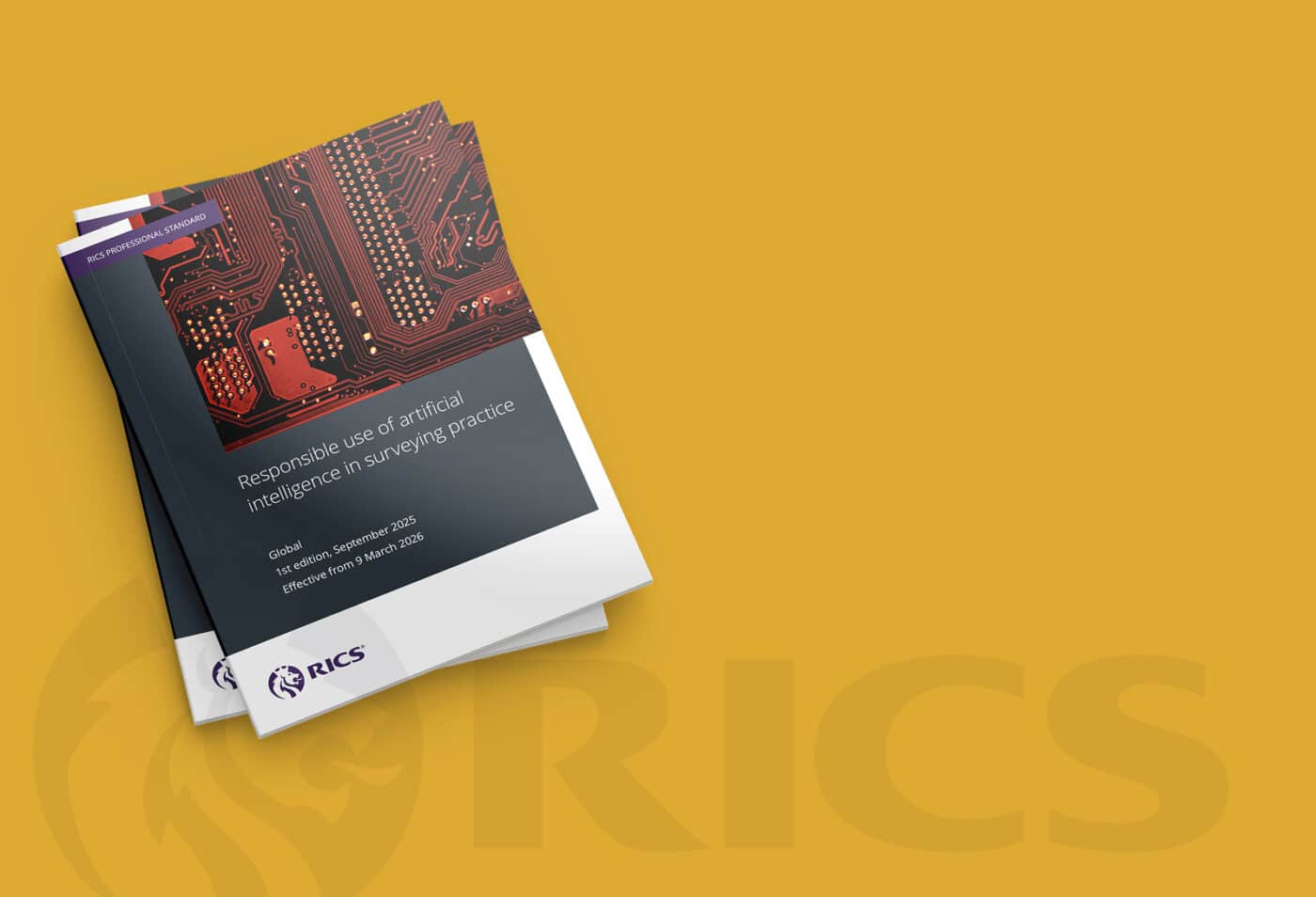
The clock has officially started ticking. With the new RICS Professional Standard on the responsible use of AI becoming effective from 9 March 2026, the era of treating artificial intelligence as an informal experiment is over. This isn’t just another piece of guidance; it’s a fundamental shift in professional obligations.
While other UK professional bodies have issued reports and ethical frameworks, RICS is one of the very first to codify AI use into a mandatory Professional Standard. This means compliance is not optional. It will be a core part of how RICS members and regulated firms are judged on their professional conduct.
The standard is comprehensive, but the changes it demands won’t happen overnight. To get you thinking, here are five of the most significant changes every surveyor needs to have on their radar right now.
1. This Isn't a Guideline – It's a Mandatory Rule
The most critical thing to understand is the status of this new document. Unlike an information paper or a piece of guidance, a Professional Standard sets firm requirements. The standard states that members must comply with its provisions, and it will be taken into account in regulatory or disciplinary proceedings.
This elevates AI from an IT issue to a core matter of professional practice and governance, on par with how you handle client money or manage conflicts of interest.
Ask yourself: Is your firm treating AI as an informal productivity tool, or as a core, auditable part of your professional practice that requires board-level attention?
2. You Now Have a Duty to Document Everything
The days of ad-hoc AI use are gone. The standard introduces a significant documentation burden, demanding that firms create and maintain a formal AI Risk Register. This isn’t a simple log; it’s a detailed document that must record the risks of bias, erroneous outputs, and data privacy, along with your mitigation plans and the firm’s risk appetite. Furthermore, this register must be reviewed at least quarterly.
Ask yourself: If a client—or RICS—asked for your AI Risk Register today, what would you be able to show them?
3. Client Data in Public AI is Now a Minefield
Perhaps the most immediate operational challenge is Section 3.1. It effectively bans staff from uploading private or confidential client data to an AI system unless two conditions are met: you have express written consent, and the firm has formally assessed the tool as safe. This directly impacts the casual use of public tools like ChatGPT with any client-related information. A simple copy-and-paste could now be a breach of a professional standard.
Ask yourself: Does your firm have a clear and enforceable policy that stops staff from pasting confidential client information into public AI tools? How do you monitor it?
4. "Professional Scepticism" Applies to the Machine
The standard makes it crystal clear: the surveyor, not the AI, is ultimately responsible for the output. It requires members to apply “professional scepticism” to AI-generated content and to document the decisions made about its reliability. You cannot simply trust the output; you must have a formal process for verifying it, especially when it has a “material impact” on your service.
Ask yourself: What is your documented process for verifying a critical output from an AI system, like a valuation summary or a market analysis, before it goes to a client?
5. Your Terms of Engagement Must Change
Transparency with clients is no longer just good practice; it’s a requirement. Section 4.3 mandates that firms must inform clients in writing and in advance when and why AI will be used. Crucially, your terms of engagement must now detail several new points, including the processes for a client to contest an AI-driven outcome and, where applicable, how a client can opt out of the use of AI in their service.
Ask yourself: Are your current client agreements fit for purpose, or do they leave you exposed by failing to be transparent about your use of AI?
The Path to Compliance Starts Now
These questions can be daunting, and they are just the beginning. The new RICS AI Standard is a complex document that requires careful planning and proactive changes to your firm’s governance, processes, and culture.
Waiting until March 2026 to figure this out will be too late.
Our new, full-day course, RICS AI Compliance: The Professional Standard, is designed to give you the answers. We provide not just the knowledge, but the practical tools, including templates for your AI Risk Register and client communication clauses, to ensure your firm is protected, compliant, and ready for the future.
Don’t wait for the deadline. Find out more and book your place here.