Empowering future leaders through AI, sustainability, and global Strategy
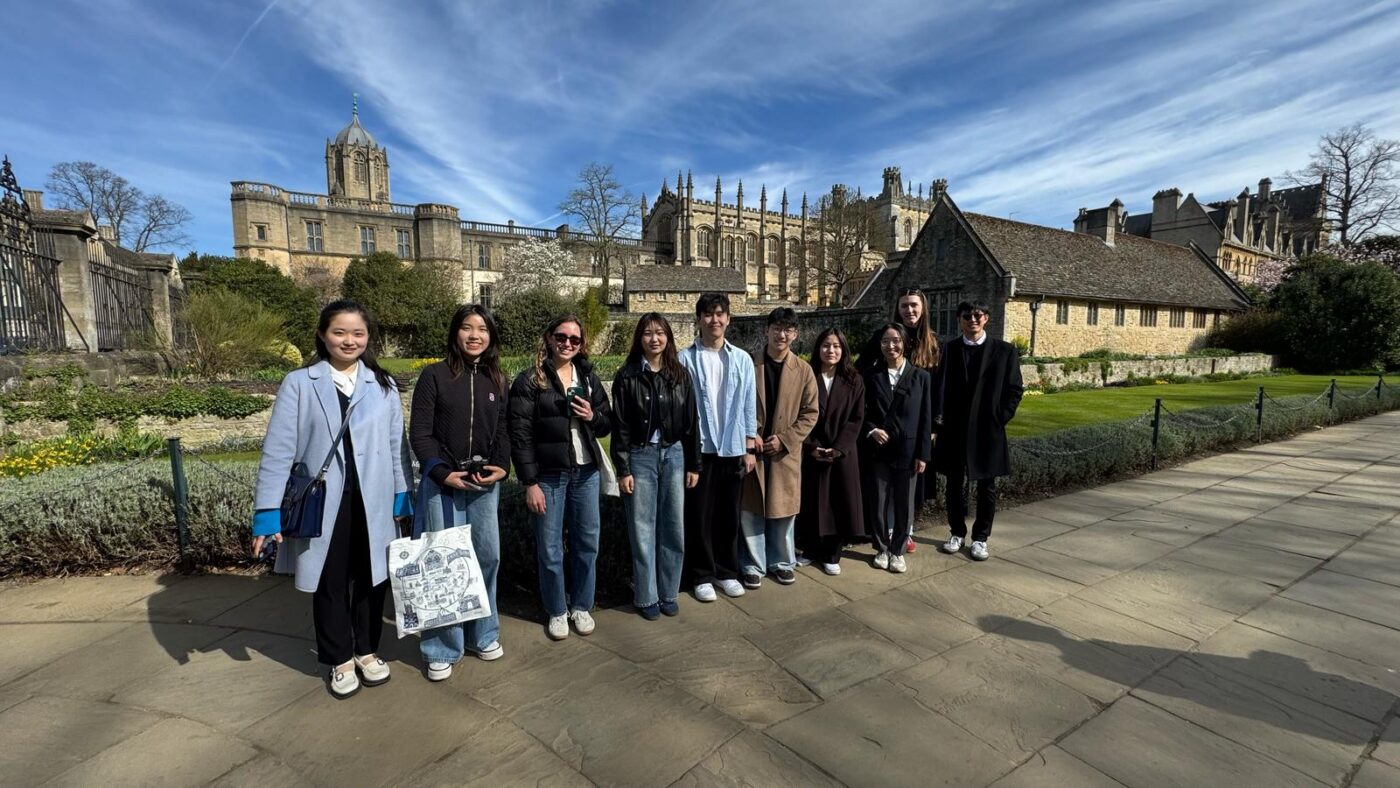
Our team of expert tutors recently played a central role in the Changemakers Teaching Week at Kellogg College, University of Oxford – a dynamic and interdisciplinary programme led by the Stanford Doerr School of Sustainability. This intensive week brought together a global cohort of emerging leaders, consisting of students from Stanford University, Taejae University (South Korea), and the University of Oxford, for a rigorous and thought-provoking immersion into the forces shaping the future of our world.
The programme was designed to explore the intersections of sustainability, technology, economics, and policy, with a growing emphasis on the role of AI in driving systems change. Highlights included site visits to key institutions such as the London Stock Exchange, The Economist archives, Chatham House, and The King’s Foundation exposing students to real-world applications of strategic thinking and innovation.
Our team supported the programme from inception through delivery. We advised on course design, facilitated academic partnerships within Oxford, and contributed directly through teaching and workshops. The initiative provided an opportunity to highlight the importance of AI literacy in sustainability and leadership training.
Professor Nigel Mehdi, who served as Director of Studies for the programme, delivered a thought-provoking lecture on Artificial Intelligence and Ethics. His session challenged students to consider the societal impacts of AI systems, particularly in relation to governance, bias, and transparency – core issues for future leaders in both public and private sectors.
Rory Young led an interactive workshop focused on real-world applications of AI across sectors, guiding students through scenarios involving machine learning in climate analytics, supply chain optimisation, and digital policy. The hands-on format encouraged critical thinking around deployment, limitations, and the strategic use of data-driven tools.
Jan-Hendrik Hoehnk gave a lecture on transitions in real estate portfolio management, focusing on how organisations can align investment strategies with net zero goals. He introduced tools to manage sustainability data and model decarbonisation pathways, highlighting the role of AI in driving smarter, more responsive portfolio decisions.
This collaboration reflects our continued commitment to equipping the next generation of changemakers with the AI fluency and systems thinking needed to address complex global challenges.
Learning Outcomes
Ethical Understanding of AI Systems
Students gained a nuanced understanding of the ethical challenges in deploying AI, including algorithmic bias, transparency, and accountability. They explored real-world cases and frameworks for ethical AI governance, enabling them to assess the societal implications of AI applications in sustainability, economics, and policy environments.
Application of AI to Global Challenges
Through workshops and case-based learning, students learned how AI can be applied to complex issues such as climate modelling, sustainable finance, and resource optimisation. They developed the skills to analyse data-driven tools and identify opportunities where AI can meaningfully support innovation and decision-making across sectors.
Systems Thinking and Interdisciplinary Collaboration
The programme emphasised systems thinking – understanding how sustainability, economics, and technology interconnect. Students worked in diverse international teams, developing strategies for change that considered policy, innovation, and human behaviour. This approach prepares them to tackle multifaceted challenges with cross-sector collaboration and integrative problem-solving.
Critical Evaluation of AI Strategies
Participants learned to critically evaluate the design, impact, and scalability of AI-driven solutions. They assessed various implementations, explored trade-offs, and considered long-term risks. By engaging with real-world examples, students strengthened their ability to lead AI initiatives that are context-aware, ethical, and aligned with sustainable outcomes.