Elevating Professional Workflows with Prompt Design
Prompt design is fast becoming a core skill in professional services – the process of crafting natural language instructions for language models to elicit desired responses. It involves formulating clear, effective queries that guide the AI model to generate accurate and relevant outputs.
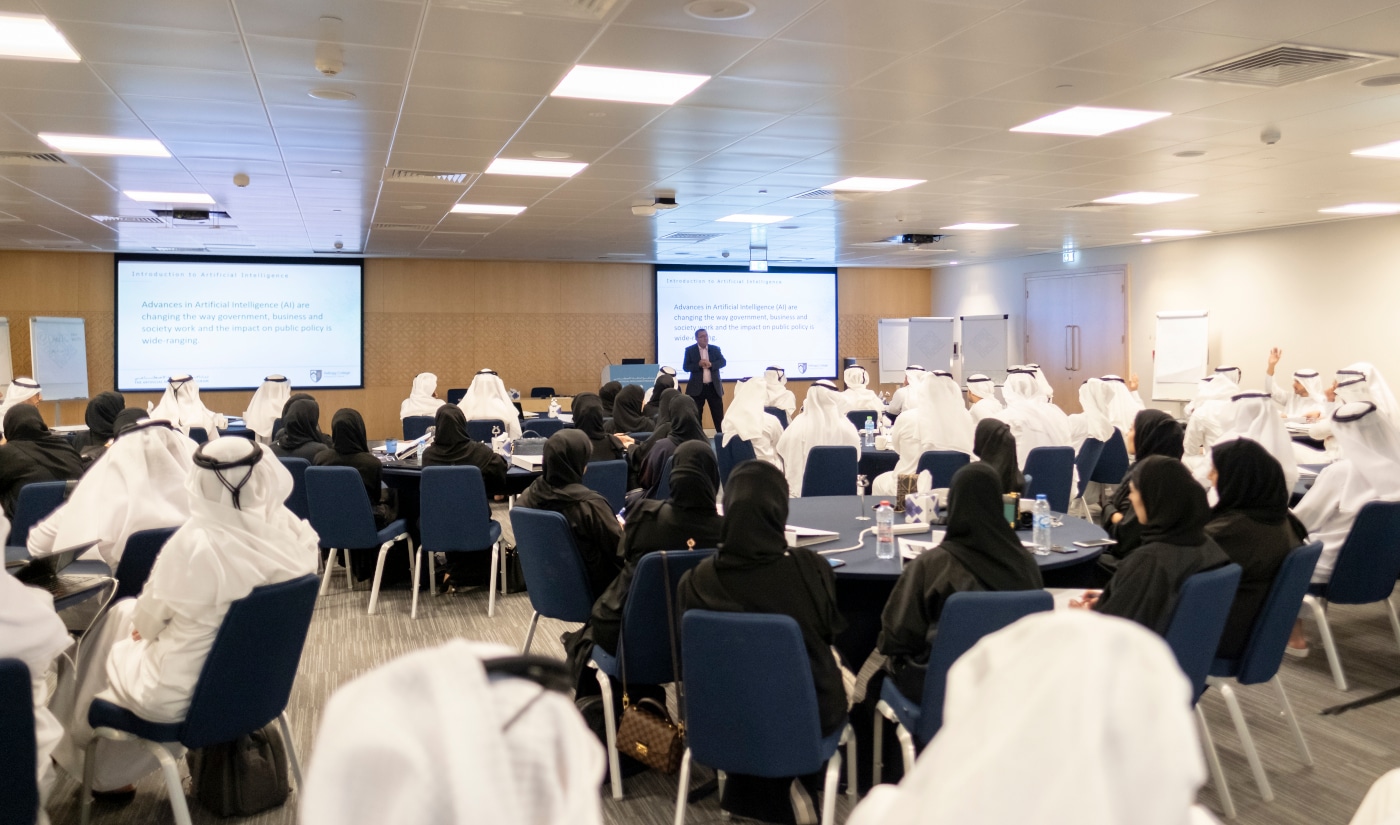
Every year, we run a dedicated Prompt Design session as part of our Artificial Intelligence programmes. In this session, participants learn how to guide generative AI tools like ChatGPT with clarity and intent – improving outputs, saving time, and sharpening analysis. Explore how tailored prompts delivered real impact across roles, from valuation to investment strategy.
The Goal
Our objective was simple: build confidence in using AI tools like ChatGPT by teaching participants how to write better prompts. Why? Because the quality of your prompt determines the value of your AI output. And in professional service firms, where documents, decisions, and data intersect daily, prompt literacy is becoming a key skill.
The Format
We structured the class around real-world workflows, drawn from participant roles. Each team was given a 3-part prompt challenge:
- Can you get an LLM to write a creative story, build on your narrative with pictures from DALL-E?
- Can you get an LLM to evaluate a set of data, and graphically represent the findings?
- What is the most outrageous lie you can get an LLM to write?
We ran the same class with a Real Estate focus.
- A valuation team used ChatGPT to extract break clauses and rent review dates from a lease summary.
- An investment manager asked the model to summarise key risk points in a market report and rewrite it for internal circulation.
- A property manager explored how an AI assistant could draft tenant notices based on standard lease terms.
We showed how simple tweaks – setting a role, adding structure, or chaining requests – led to smarter, cleaner results.
From: “Summarise this lease.”
To: “You are a senior surveyor summarising a commercial lease for an internal client. Extract key terms (break clauses, rent review dates, service charge) and present them in plain English.”
What we learned
Participants quickly realised that LLMs aren’t just automation tools – they’re co-pilots. The most common reaction? “I didn’t realise you could tell it exactly how to think.” Most importantly, they began to see that prompting is a skill – not technical, but strategic and creative.
We discussed prompt libraries, versioning, and how to document use cases for internal sharing. Importantly, we addressed the limitations: hallucinations, overconfidence, and when to bring human oversight back in.
By the end of the session, attendees had built their own prompt blueprints tailored to their function – tools they could take back and use the next day.
The Takeaway
- Prompt design isn’t about coding – it’s about communicating with precision. As AI enters more workflows in professional service firms, those who know how to guide these tools will lead the change.
- Prompt design isn’t about tricks. It’s about understanding what you want, giving the AI the right context, and staying in control of the output.
This was one of our most energising sessions to date – and we’re now embedding prompt labs throughout our course modules.
Want to experience it? Book one of our courses on the Training tab.